
Barbell curls hurt your wrists? 5 swaps that still build
A straight bar forces both wrists into one angle. Here are five curl variations that train the biceps just as hard, plus how to load them and when wrist pain needs a professional.
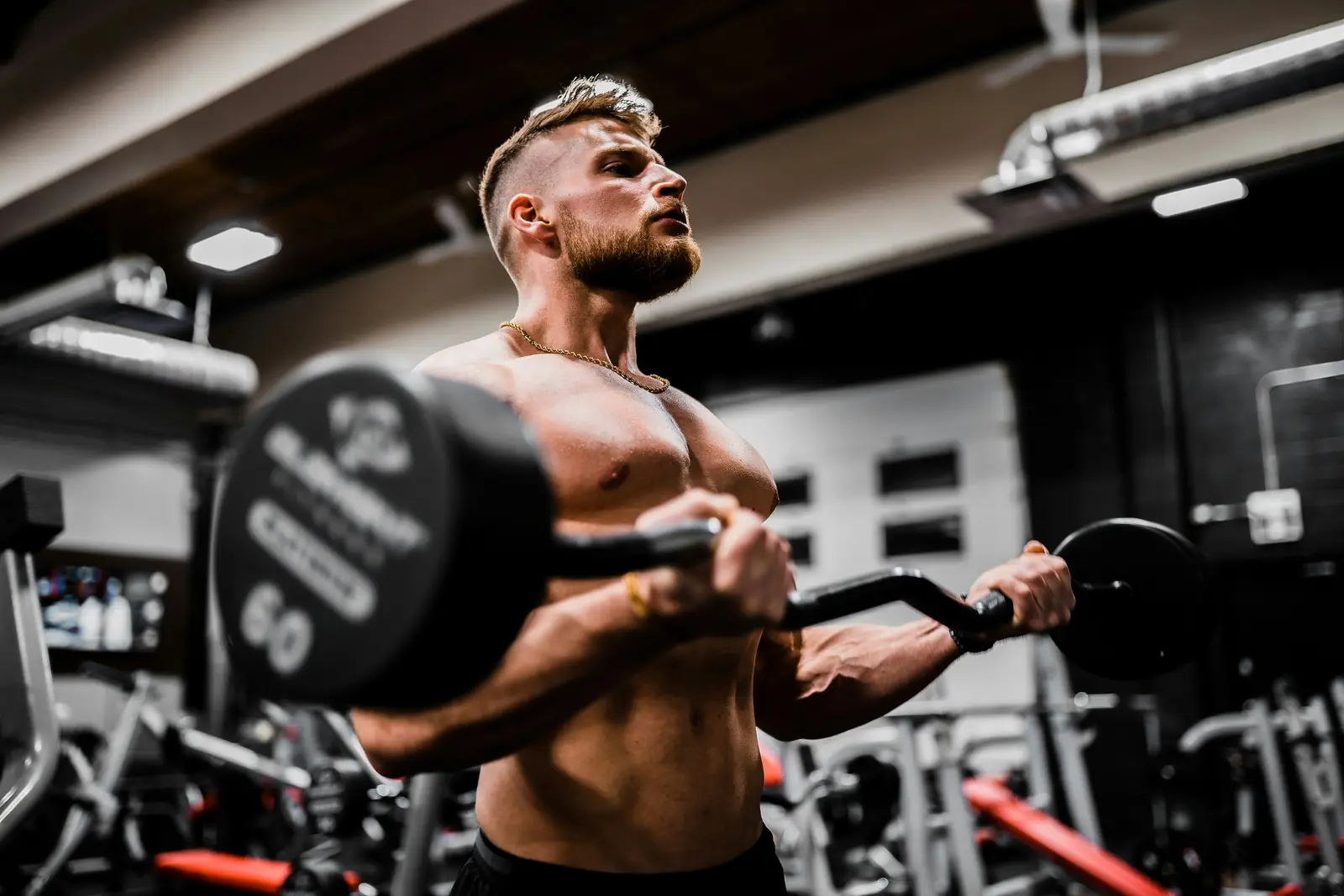
The best alternatives to barbell curls are dumbbell curls, hammer curls, EZ-bar curls, incline dumbbell curls and cable curls. All five load the biceps with your hands in a position the wrist can tolerate, and all five progress the same way: add reps, then add weight. Make the switch if a straight bar pushes your wrists into extension you cannot control at a weight that actually challenges the muscle.
Why a straight bar bothers your wrists
A straight bar locks both hands to one grip width and one wrist angle. As the load climbs, the bar rolls your hands backward into extension, and the wrists end up taking load the biceps should be handling. Muscle & Fitness lists four common causes in the barbell curl: the fixed grip, wrist hyperextension as you fatigue, a grip width that doesn't match your forearm anatomy, and body English that turns the curl into a hip hinge.
Try the free fixes first. Move your grip in or out a finger at a time, and check that your knuckles stay roughly in line with your forearms through the rep instead of letting the bar drag them back. Take weight off until you can finish three sets without your hands rolling behind you. Some wrists settle down with a grip change alone. If yours still hurt at a weight that works the biceps, change the exercise.
1. Dumbbell curls
Each hand finds its own angle with dumbbells, so nothing forces your wrist into a position it hates. Curling one arm at a time also exposes a weaker side, which is common and worth fixing before it becomes a habit. Do 3 sets of 8-12 with a supinated grip and your elbows pinned to your sides. Most dumbbell handles are thicker than a barbell, so your grip may quit before your biceps do; straps are fine here.
2. Hammer curls
Your hands stay neutral in a hammer curl, which keeps the wrist stacked over the forearm and takes the stretch off the biceps tendon at the bottom. The neutral grip shifts work toward the brachialis and brachioradialis, the muscles that push the biceps up and give the arm width when you look at it from the front. Run 3 sets of 10-12, usually heavier than your dumbbell curls, and keep the dumbbells from drifting forward as you fatigue.
3. EZ-bar curls
The zigzag bar puts your hands in a semi-supinated position, often the angle a sore wrist tolerates. You still get both hands moving together and you can load it heavier than most dumbbell racks go. Grip the bar where the angle sits flattest under your palms, which may be closer to the middle than you expect. Start at 3 sets of 8-12 and treat it as the closest drop-in replacement for the straight bar.
4. Incline dumbbell curls
Set an incline bench to about 45 to 60 degrees and let your arms hang behind your torso. That position puts the long head of the biceps under stretch at the bottom, which is the reason to keep this variation in the rotation. You'll use noticeably lighter weight than a standing curl, so don't chase numbers here. Do 3 sets of 10-12 and pause for a beat at full extension before curling.
5. Cable curls
Cables hold tension at the bottom of the rep where a dumbbell goes slack, and a single handle lets you set your own wrist angle rather than inheriting the bar's. The Bayesian version, facing away from a low pulley with your arm behind your body, adds stretch at the bottom and is the one to pick if your biceps feel the standing curl mostly at the top. Do 3 sets of 12-15 with a slow lower of about two seconds.
How to add them to your week
Two sessions of direct arm work per week is enough if you're also rowing and doing pulldowns. Count 10 to 20 sets per week for the biceps including what your back training already gives you, and start near the bottom of that range. Use double progression: stay at the same weight until you hit the top of the rep range on all three sets, then add the smallest jump your gym allows. Leave one or two reps in reserve on most sets, and keep the elbow position stable so the biceps do the work.
Weeks 1-2
Upper body A
- EZ-bar curl3 sets · 10-12 · Same weight both weeks. Stop one rep short of failure on the last set.
- Incline dumbbell curl3 sets · 10-12 · Add one rep per set each week before touching the weight.
- Hammer curl2 sets · 12-15 · Final set close to failure, neutral wrists throughout.
Upper body B
- Dumbbell curl, alternating arms3 sets · 8-12 · Match reps on both arms before adding weight.
- Single-arm cable curl or Bayesian cable curl3 sets · 12-15 · Two-second lower, hold the stretch for one beat.
- Reverse EZ-bar curl2 sets · 12-15 · Light load, forearms and brachioradialis focus.
Weeks 3-4
Upper body A
- EZ-bar curl3 sets · 8-10 · Add 2.5 kg once you hit 12 reps on all three sets at the old weight.
- Incline dumbbell curl3 sets · 10-12 · Small jumps only; the stretch position punishes ego loading.
- Hammer curl3 sets · 10-12 · Add weight when the top of the range feels controlled.
Upper body B
- Dumbbell curl, alternating arms3 sets · 8-12 · Add 1 kg per hand after two clean sessions at the top of the range.
- Single-arm cable curl or Bayesian cable curl3 sets · 12-15 · Increase one plate, keep the tempo.
- Reverse EZ-bar curl2 sets · 12-15 · Hold reps steady; this is support work for the elbows and forearms.
When wrist pain needs a professional
Discomfort that shows up during the set and fades by the next day is normal training soreness. Pain that lingers for a week or more, wakes you at night, or comes with tingling or numbness in the fingers is worth an examination before you keep loading it. Everything here is general training information, not medical advice, and a physiotherapist can check whether the problem is the wrist, the forearm or the elbow.
Frequently asked questions
- Can I build big arms without barbell curls?
- Yes. The biceps grow from progressive load through a full range, and dumbbells, cables or an EZ bar all provide that. Plenty of people train arms for years without a straight bar and get the same result.
- Are dumbbell curls better than barbell curls?
- Neither wins in general. Dumbbells let each wrist find its own angle and expose side-to-side differences; a bar lets you load more with less setup. Pick whichever one your wrists tolerate at a weight that actually challenges you.
- How many sets of curls do I need per week?
- Around 10 to 20 direct sets for the biceps, including the work your rows and pulldowns already do. Start at 8 to 10 and add sets only if you're recovering and still progressing.
- Do I have to stop barbell curls completely?
- No. If the bar is comfortable at a working weight, keep it and use one alternative as a second movement. The swap matters for wrists that hurt, not for everyone.
- Can I do these alternatives at home?
- Yes, with dumbbells or a band. Hammer curls and regular dumbbell curls need nothing else, and a band anchored at waist height covers the cable curl.
Sources
Related guides
Strength training vs muscle size: what matters after 70
Muscle size and strength are separate adaptations, and the longevity case leans on strength. Here's how a 78-year-old reached a 132 lb deadlift, and how to split your own training.
Six weighted ab exercises that beat a thousand crunches
Loaded hollow holds, cable crunches and four more weighted ab exercises, with the sets, reps and weekly loading scheme that actually builds core strength.
Volume vs intensity for muscle growth: more sets win, with a catch
Pelland's meta-analysis found more weekly sets per muscle generally meant more growth, up to roughly 30-40, with diminishing returns. Intensity matters, but it cannot replace volume.