
Upper lower split benefits: why 4 days beats 6 for most lifters
An upper lower split trains every muscle twice a week and gives each one more hard sets than full body. Here is the four-day template, the set targets, and who should skip it.
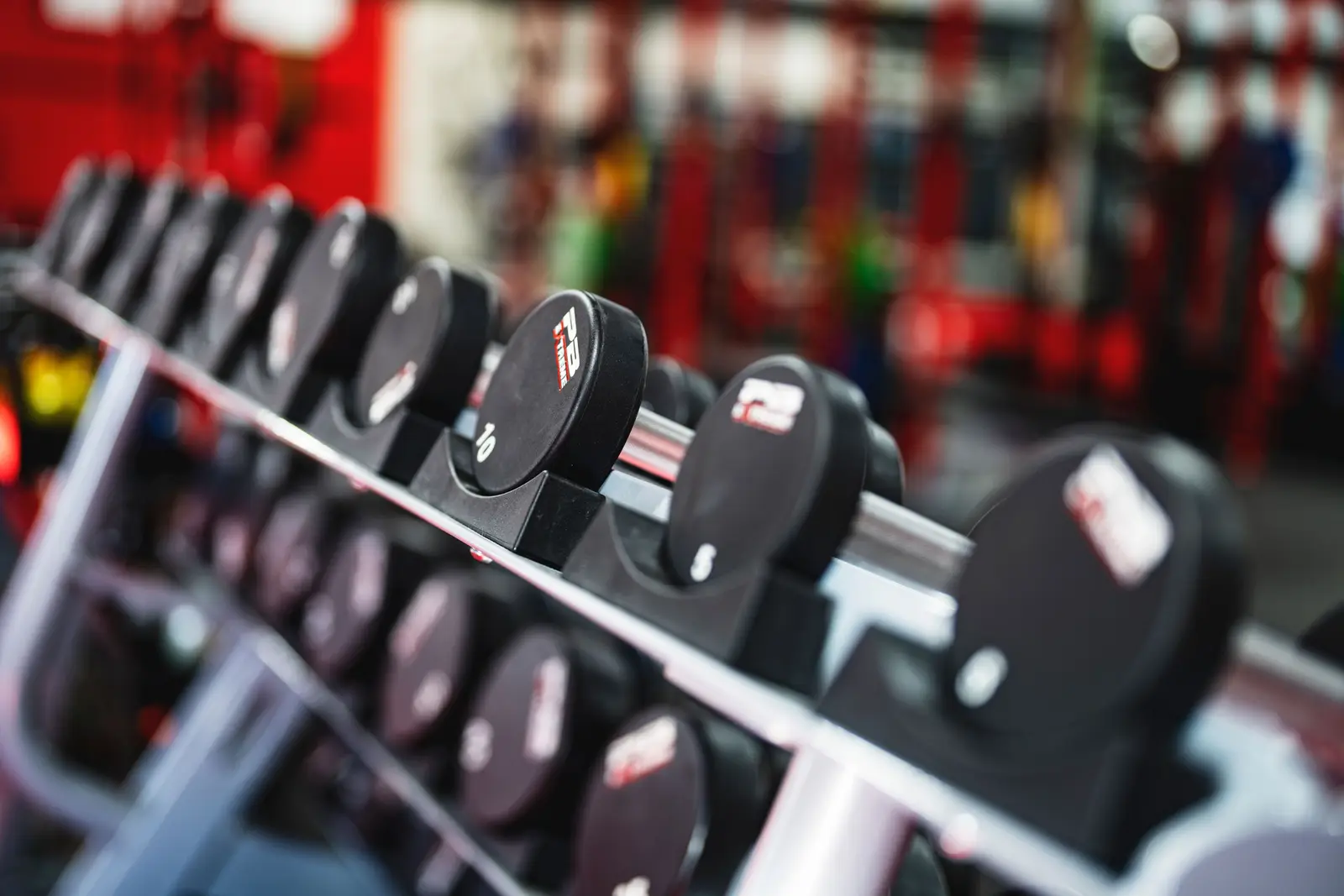
The benefits of an upper lower workout split come down to frequency and set quality. You train chest, back, shoulders and arms on one day, then quads, glutes, hamstrings and calves on the next, so every muscle gets two sessions a week. At four sessions a week that works out to roughly every three to four days per muscle, which is enough to grow and enough to recover.
The arrangement is decades old and it survives because it is easy to run. Two templates, four sessions, a fixed rotation. You never have to remember which of eight body parts you hit on Tuesday.
What a week looks like
Monday upper, Tuesday lower, Wednesday off, Thursday upper, Friday lower, weekend off. The two upper sessions should use different movements: a barbell press and row on one day, dumbbells and a pulldown on the other, so the same joints are not loaded identically twice in four days.
If you train three days a week, rotate the order. Upper, lower, upper one week; lower, upper, lower the next. Each muscle gets three sessions every two weeks, which is plenty for a beginner or someone coming back from a break.
Why two sessions per muscle beats one
Growth tracks hard sets per muscle per week, and most programs land somewhere between 10 and 20 sets. You can cram all of them into a single session, but the last few sets get done with exhausted shoulders and sloppy reps. Spread across two sessions, the same volume arrives with better quality. You also get a second shot at progress: add a rep on Monday's bench press and Thursday gives you another chance to match it.
Justin Steele makes the same case in Men's Health: the more often you can train a muscle with effective hard sets, the better your results, as long as you recover between sessions. An upper lower split reaches twice-weekly frequency without the mental overhead of a six-day push pull legs rotation.
Where it beats full body
Full body three times a week trains everything three times, so both plans clear the frequency bar. The difference is exercise slots. In a 60-minute full body session you fit one squat, one hinge, one press and one row before you are out of time. An upper day keeps the press and the row, then adds a pulldown, a lateral raise and some arm work for the joints that need it.
The split also suits a recomposition phase, where you eat near maintenance and want to add muscle without a dedicated bulk. Ten to twenty weekly sets per muscle is enough stimulus, and the two rest days leave room for cardio.
The catch: long sessions and little room for a lagging muscle
An upper day with five or six exercises plus a warm-up runs 60 to 75 minutes. If your gym window is 45 minutes, you will be cutting sets or skipping arms.
You also get only two upper sessions, so a stubborn chest or pair of shoulders gets the same number of exposures as everything else. A lifter with one lagging muscle often does better on push pull legs, where the neglected group comes up three times in six days.
At two sessions a week, upper lower is the wrong tool. Each muscle would get trained once a week, which is the weakness of a body-part split. Train full body twice or three times instead.
Sets, reps and how to progress
Start with 10 to 20 hard sets per muscle per week, split into 4 to 10 sets per session. Main lifts for 5 to 10 reps, isolation work for 10 to 20. Finish each set with one to three reps left in the tank, which is hard enough to grow and light enough to repeat twice a week.
- Add reps first: work from the bottom of the rep range to the top on every set.
- Then add load: 2.5 kg on a barbell, 1 to 2 kg per dumbbell, one plate on a machine.
- Add a set when a lift stalls for three sessions in a row.
- Cut sets by a third every 6 to 8 weeks if reps are dropping and joints ache.
Write down what you lift. The split only pays off if Thursday's session is heavier or cleaner than the one four weeks ago. Keep protein at 1.6 to 2.2 g per kg of bodyweight while you run it, and sleep is the other variable that decides whether 16 sets per muscle is stimulus or damage.
An 8-week upper lower plan
Weeks 1-4
Upper A
- Barbell bench press4 sets · 5-8 · Add 2.5 kg when every set reaches 8 reps.
- Barbell row4 sets · 6-10 · Add 2.5 kg at 10 reps on all sets.
- Seated dumbbell shoulder press3 sets · 8-12 · Add reps weekly, then go up 2 kg per dumbbell at 12.
- Lat pulldown3 sets · 10-12 · Add 5 kg once you hit 12 on every set.
- Dumbbell curl3 sets · 10-12 · Add one rep per set per week, then add weight.
Lower A
- Back squat4 sets · 5-8 · Add 5 kg when all sets hit 8 reps with clean depth.
- Dumbbell Romanian deadlift3 sets · 8-10 · Add 2 kg per dumbbell once 10 reps feel controlled.
- Leg press3 sets · 10-12 · Add one plate at 12 reps on all sets.
- Leg curl3 sets · 10-15 · Add a small increment at 15 reps.
- Standing calf raise4 sets · 10-15 · Add load at 15 reps with a two-second pause.
Upper B
- Incline dumbbell press4 sets · 8-12 · Add reps first, then 2 kg per dumbbell.
- Chest-supported row4 sets · 8-12 · Add 2.5 kg at 12 reps on every set.
- Pull-up or assisted pull-up3 sets · 5-10 · Add a rep per week, then reduce assistance.
- Lateral raise3 sets · 12-15 · Add 1 kg per hand at 15 reps with no swing.
- Cable triceps pressdown3 sets · 10-15 · Add one small plate at 15 reps.
Lower B
- Deadlift4 sets · 3-5 · Add 5 kg when all sets hit 5 reps with a braced back.
- Bulgarian split squat3 sets · 8-10 per leg · Add reps before load; hold dumbbells once 10 is easy.
- Hip thrust3 sets · 8-12 · Add 5 kg at 12 reps with a one-second squeeze.
- Leg extension3 sets · 12-15 · Add a plate at 15 reps.
- Seated calf raise4 sets · 12-20 · Add load at 20 reps, pause at the bottom.
Weeks 5-8
Upper A
- Barbell bench press5 sets · 5-8 · Hold the weight if the extra set drops you below 5 reps.
- Barbell row5 sets · 6-10 · Same load rules; add weight only at 10 reps across five sets.
- Seated dumbbell shoulder press4 sets · 8-12 · Add 2 kg per dumbbell at 12 reps.
- Lat pulldown4 sets · 10-12 · Add 5 kg when 12 reps stay strict.
- Dumbbell curl3 sets · 10-12 · Add 1 kg per hand at 12 reps.
Lower A
- Back squat5 sets · 5-8 · Add 2.5 kg only when depth holds on all five sets.
- Dumbbell Romanian deadlift4 sets · 8-10 · Add 2 kg per dumbbell at 10 controlled reps.
- Leg press4 sets · 10-12 · Add a plate at 12 reps on all four sets.
- Leg curl3 sets · 10-15 · Add one increment at 15 reps.
- Standing calf raise5 sets · 10-15 · Add load at 15 reps with the pause intact.
Upper B
- Incline dumbbell press5 sets · 8-12 · Add 2 kg per dumbbell at 12 reps on all sets.
- Chest-supported row5 sets · 8-12 · Add 2.5 kg at 12 reps.
- Pull-up or assisted pull-up4 sets · 5-10 · Add a rep per set before cutting assistance.
- Lateral raise3 sets · 12-15 · Add 1 kg per hand at 15 strict reps.
- Cable triceps pressdown3 sets · 10-15 · Add a small plate at 15 reps.
Lower B
- Deadlift4 sets · 3-5 · Add 5 kg when five reps stay fast off the floor.
- Bulgarian split squat4 sets · 8-10 per leg · Add dumbbells once 10 reps per leg is comfortable.
- Hip thrust4 sets · 8-12 · Add 5 kg at 12 reps.
- Leg extension3 sets · 12-15 · Add a plate at 15 reps.
- Seated calf raise5 sets · 12-20 · Add load at 20 reps with a full stretch.
Who should skip it
Skip it if you train twice a week, if your sessions are capped at 45 minutes, or if you are mid-season in a sport where heavy lower body work ruins the next day's practice. Beginners can run it. Keep the exercise count to four per session for the first eight weeks and add sets before you add movements. If you have a joint issue or a health condition that affects training, get a doctor's input before you start adding volume.
Frequently asked questions
- How many days a week should I train on an upper lower split?
- Four. Upper, lower, rest, upper, lower gives each muscle two sessions with a rest day between the two lower days. Three works on a rotating schedule. Two is worse than full body twice a week, because each muscle ends up trained once.
- Is an upper lower split good for beginners?
- Yes. There are only two templates to learn and the main lifts repeat often enough to build technique. Keep four exercises per session for the first two months, then add a set before adding an exercise.
- Upper lower split or push pull legs?
- Upper lower if you train three or four days a week. Push pull legs needs five or six sessions to hit everything twice, so it suits people with more gym time or one muscle that needs extra work.
- How many sets per muscle per week?
- 10 to 20 hard sets, with most people doing well around 12 to 16. Start at the low end, add a set every week or two while reps climb, and stop adding when sleep and joints suffer.
- Do I have to train to failure?
- No. Stopping one to three reps short keeps the second weekly session productive. If you want failure, use the last set of an isolation exercise only.
- Can I add cardio to an upper lower split?
- Yes. Put easy cardio on the two rest days or after lower sessions. Keep hard intervals away from the day before a squat or deadlift session.
Sources
Related guides
Beginner gym workout plan: why 3 days a week beats 5 days
Three full-body sessions a week for four weeks, 2 to 3 sets of 8 to 12 reps, and a written rule for adding weight. The plan is built for a first month or a return after a year off.

Robert Strauss's over-40 workout: 45 seconds on, 15 off
Robert Strauss, 43, trains in 45-minute F45 classes: a 7-minute warmup, then three rounds of 45 seconds on and 15 off. What the format does well, and where it falls short.
Women's Health's beginner plan: 4 weeks, 20 to 45 minutes
A four-week beginner plan of full-body strength sessions, optional cardio and scheduled rest days, 20 to 45 minutes at a time. The equipment list is shorter than it looks.