
Beginner gym workout plan: why 3 days a week beats 5 days
Three full-body sessions a week for four weeks, 2 to 3 sets of 8 to 12 reps, and a written rule for adding weight. The plan is built for a first month or a return after a year off.
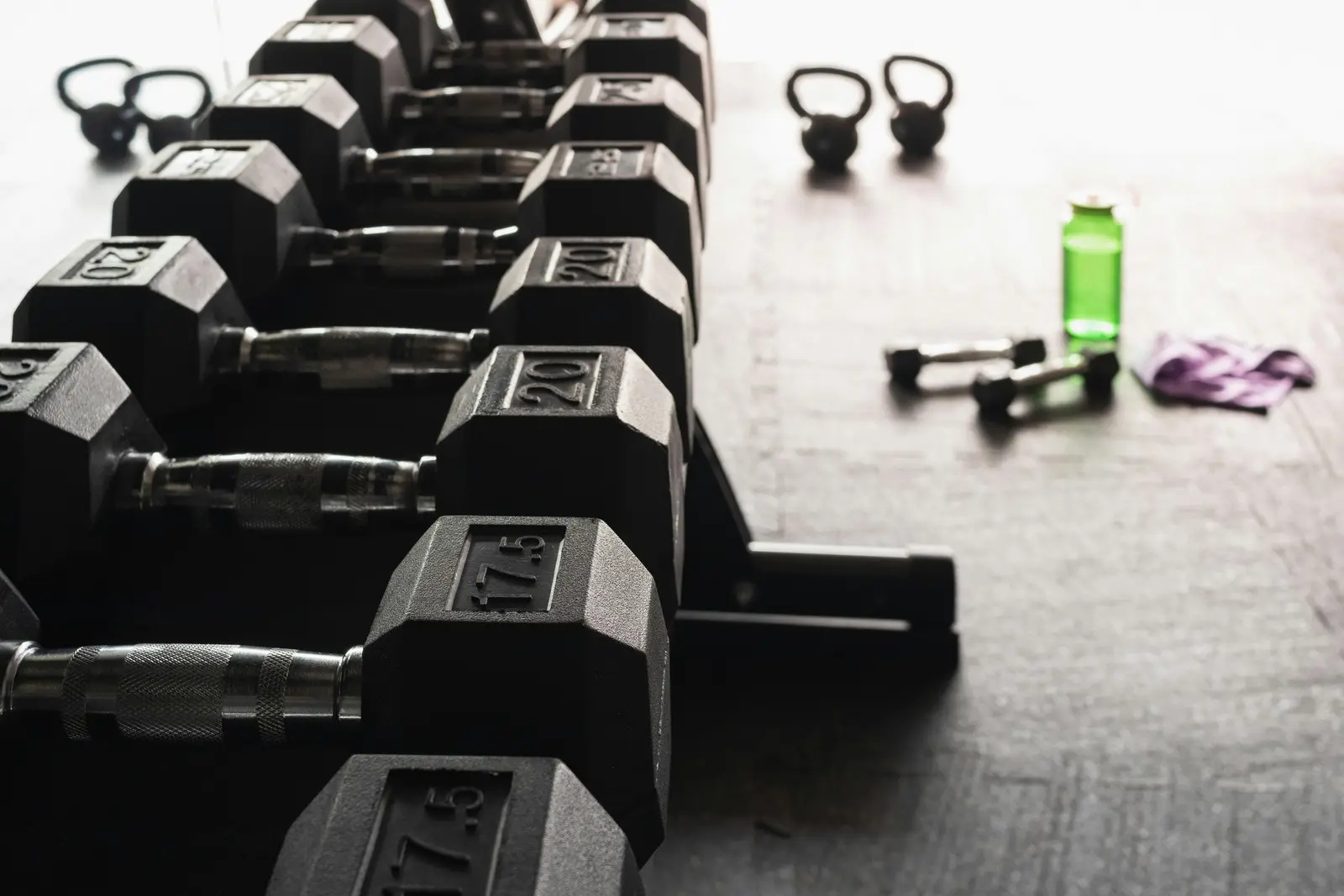
A beginner gym workout plan should be three full-body sessions a week for four weeks, with one or two exercises per muscle group and a written rule for when the weight goes up. Three days clears the minimum the American College of Sports Medicine sets for healthy adults, which is muscle-strengthening work at least twice a week, and it leaves four days for everything else in your life.
Most first months fail on the deciding. You walk in, look around, do three machines at whatever weight the last person left on them, and repeat that for six weeks without changing anything. A written plan fixes that: you know the exercises before you arrive, and you know the exact rep count that earns more weight. Write the session out before your first visit, and pick a quiet hour if a full floor makes you nervous.
The four-week beginner gym workout plan
Weeks 1 and 2 are full body, three sessions a week, with a rest day between each one. Week 3 splits into push, pull and legs on the same three days, which gives each area more sets. Week 4 moves to four shorter sessions alternating upper and lower body. If four days leaves you sore and sleeping badly, run week 3 again for another week.
Every session puts the biggest movement first and works down: a squat or leg press, a push, a pull, a hinge, then a core exercise. Compound lifts come first because they need the most attention and give the most back per set. Smaller work like curls, lateral raises and calf raises fills the last ten minutes from week 3 onward.
Week 1: full body, 2 sets per exercise
Full body A
- Goblet squat2 sets · 8-12 · Add 5 lb when you get 12 reps on both sets
- Dumbbell bench press2 sets · 8-12 · Add 5 lb per hand once 12 reps are clean
- Seated cable row2 sets · 10-12 · Move up one plate at 12 reps
- Dumbbell Romanian deadlift2 sets · 10-12 · Add 5 lb per hand at 12 reps
- Plank2 sets · 20-30 seconds · Add 5 seconds each week
Full body B
- Leg press2 sets · 10-12 · Add 10 lb at 12 reps on both sets
- Incline dumbbell press2 sets · 8-12 · Add 5 lb per hand at 12 reps
- Lat pulldown2 sets · 10-12 · Add 5 lb at 12 reps
- One-arm dumbbell row2 sets · 10-12 per side · Add 5 lb when both sides hit 12
- Dead bug2 sets · 8 per side · Add 2 reps a week up to 12
Full body A again
- Goblet squat2 sets · 8-12 · Same weight as the first A session
- Dumbbell bench press2 sets · 8-12 · Same weight as the first A session
- Seated cable row2 sets · 10-12 · Same weight as the first A session
- Dumbbell Romanian deadlift2 sets · 10-12 · Same weight as the first A session
- Plank2 sets · 25-35 seconds · 5 seconds longer than the first A session
Week 2: same sessions, 3 sets on the first three lifts
Full body A
- Goblet squat3 sets · 8-12 · Add 5 lb once all three sets reach 12
- Dumbbell bench press3 sets · 8-12 · Add 5 lb per hand at 12 reps on every set
- Seated cable row3 sets · 10-12 · Move up one plate at 12 reps on every set
- Dumbbell Romanian deadlift2 sets · 10-12 · Add 5 lb per hand at 12 reps
- Plank2 sets · 30-40 seconds · Add 5 seconds each week
Full body B
- Leg press3 sets · 10-12 · Add 10 lb once all three sets reach 12
- Incline dumbbell press3 sets · 8-12 · Add 5 lb per hand at 12 reps on every set
- Lat pulldown3 sets · 10-12 · Add 5 lb at 12 reps on every set
- One-arm dumbbell row2 sets · 10-12 per side · Add 5 lb when both sides hit 12
- Dead bug2 sets · 10 per side · Add 2 reps a week up to 12
Full body A again
- Goblet squat3 sets · 8-12 · Use the same weight as Monday and aim for more reps
- Dumbbell bench press3 sets · 8-12 · Use the same weight as Monday and aim for more reps
- Seated cable row3 sets · 10-12 · Use the same weight as Monday and aim for more reps
- Dumbbell Romanian deadlift2 sets · 10-12 · Add 5 lb if last session felt easy
- Plank2 sets · 35-45 seconds · Add 5 seconds each week
Week 3: push, pull, legs
Push
- Dumbbell bench press3 sets · 8-10 · Add 5 lb per hand once all three sets reach 10
- Seated dumbbell shoulder press3 sets · 10-12 · Add 5 lb per hand at 12 reps
- Cable triceps pushdown2 sets · 12-15 · Add one plate at 15 reps
- Dumbbell lateral raise2 sets · 12-15 · Add 2.5 lb per hand at 15 reps
Pull
- Lat pulldown3 sets · 10-12 · Add 5 lb once all three sets reach 12
- Seated cable row3 sets · 10-12 · Add one plate at 12 reps on every set
- Face pull2 sets · 15 · Add one plate when 15 reps feel easy
- Dumbbell curl2 sets · 10-12 · Add 2.5 lb per hand at 12 reps
Legs
- Goblet squat3 sets · 8-12 · Add 5 lb once all three sets reach 12
- Dumbbell Romanian deadlift3 sets · 10-12 · Add 5 lb per hand at 12 reps on every set
- Seated leg curl2 sets · 12-15 · Add one plate at 15 reps
- Standing calf raise2 sets · 15-20 · Add weight at 20 reps
- Plank2 sets · 40-50 seconds · Add 5 seconds each week
Week 4: upper and lower body, four short sessions
Upper A
- Dumbbell bench press3 sets · 6-8 · Add 5 lb per hand at 8 reps on every set
- Seated cable row3 sets · 8-10 · Add one plate at 10 reps on every set
- Dumbbell shoulder press3 sets · 8-10 · Add 5 lb per hand at 10 reps
- Lat pulldown3 sets · 8-10 · Add 5 lb at 10 reps
Lower A
- Goblet squat3 sets · 6-8 · Use the heaviest dumbbell you can hold with good form at 8 reps
- Dumbbell Romanian deadlift3 sets · 8-10 · Add 5 lb per hand at 10 reps
- Leg press3 sets · 10-12 · Add 10 lb at 12 reps
- Plank2 sets · 45-60 seconds · Add 5 seconds each week
Upper B
- Incline dumbbell press3 sets · 8-10 · Add 5 lb per hand at 10 reps
- One-arm dumbbell row3 sets · 8-10 per side · Add 5 lb when both sides hit 10
- Dumbbell lateral raise3 sets · 12-15 · Add 2.5 lb per hand at 15 reps
- Dumbbell curl2 sets · 10-12 · Add 2.5 lb per hand at 12 reps
Lower B
- Leg press3 sets · 8-10 · Add 10 lb at 10 reps on every set
- Hip thrust3 sets · 10-12 · Add 10 lb at 12 reps
- Seated leg curl3 sets · 12-15 · Add one plate at 15 reps
- Dead bug2 sets · 10 per side · Slow the movement down before adding reps
How much weight to use
Pick a weight that makes the last two reps hard while your form stays the same. If you could do five more reps, it's too light; if your knees cave on a squat or your back rounds on a deadlift, it's too heavy. The 8 to 12 rep range suits beginners because it's heavy enough to build strength and light enough that you can practice the movement. When you reach the top of the range on every set, add 5 lb to an upper-body lift and 10 lb to a lower-body lift. Getting stronger on the same exercise is the first thing to chase.
The warm-up takes eight minutes
Five to ten minutes of easy walking or cycling raises your heart rate and warms the joints. Then do one set of your first exercise with an empty bar or the lightest dumbbell, and one set at about half your working weight. Adjust the seat, the handles and the range of motion before you load anything. A leg press set up for someone six inches taller than you is how knees get hurt in week one.
Rest days are where the strength shows up
Leave at least one day between sessions. Muscle soreness that fades within 48 hours is normal; joint pain that gets sharper each session means change the exercise, not the plan. Sleep is the recovery tool you control most easily, and training on back-to-back days when you're new usually costs more than it adds.
Write down three numbers
Log the weight, the sets and the reps for every exercise, on paper or in your phone. Progressive overload means doing slightly more than last time, and you can't do slightly more than last time if you can't remember last time. This one habit separates people who are stronger a year later from people still using the same three machines at the same weight.
Cardio goes on the days between
Twenty to thirty minutes of easy walking, cycling or rowing on your off days helps you recover and doesn't interfere with lifting. Keep it easy enough to hold a conversation. Save intervals for month two, when the strength sessions stop leaving you wrecked.
Why three days and not five
Three full-body sessions give each muscle roughly six to nine hard sets a week, which is a sensible starting dose; adding sets before you can recover from those is where beginners stall. Three days also survives a bad week. A five-day plan loses two sessions when work gets busy, and two missed sessions feel like failure, which is how people quit in week three.
The other argument for fewer days is that a program you finish is the one that works. Most of your early strength comes from repeating the same movements and adding weight, so variety isn't helping you yet. Do the same goblet squat for four weeks and you'll have a number to beat.
Pros
- Three sessions a week fit around work and leave four rest days
- Every exercise comes with a written rule for adding weight
- Dumbbells and machines only, so you can start without a spotter
- Weeks 3 and 4 add volume without changing your schedule much
Cons
- Four weeks is a starting block, not a plan you can run for a year
- Week 3 assumes you can get to a gym with basic machines
- The progression only works if you track your sets
- No direct arm or calf work until week 3
What to do after week 4
Repeat week 4 for another two or three weeks and keep adding weight. When that stops working, move to an upper lower split with four lifting days, which gives each muscle more sets per week without making every session longer.
If you're training at home
The same four weeks work with two adjustable dumbbells and a bench. Swap the leg press for split squats, the lat pulldown for band pull-aparts or chin-ups, and the cable row for a dumbbell row with your hand on a chair. Less equipment changes the exercises, not the rules about sets, reps and adding weight.
Frequently asked questions
- How many days a week should a beginner go to the gym?
- Three, with at least one rest day between sessions. Two is the floor if three doesn't fit your week, since the American College of Sports Medicine sets the minimum at twice-weekly strength work for healthy adults. Five or six days is more than most beginners can recover from in month one.
- How long should a beginner gym session be?
- About 40 minutes of lifting after an 8-minute warm-up. Week 1 runs closer to 30 minutes because you're doing two sets per exercise. Sessions get longer in week 3 as sets go up.
- What should I do on my first day at the gym?
- Do full body A from week 1 with weights you could lift 20 times. Your goal that day is learning where the equipment is and leaving with a number written in your log. You'll finish in about 25 minutes.
- Can I build muscle training three days a week?
- Yes. Three full-body sessions give each muscle six to nine sets a week, and beginners gain strength on less than that. More days help later, once you can recover from what you're already doing.
- Should I do cardio before or after weights?
- After, or on a separate day. Hard cardio first leaves less in the tank for the lifts that need your attention most in month one. Five minutes of easy cycling before lifting is fine as a warm-up.
- How much stronger will I be after four weeks?
- You'll add weight to most of the same lifts, and week 1 weights will feel light by week 4. How much depends on where you started and whether you slept. Visible size takes longer than a month.
Sources
Related guides

Robert Strauss's over-40 workout: 45 seconds on, 15 off
Robert Strauss, 43, trains in 45-minute F45 classes: a 7-minute warmup, then three rounds of 45 seconds on and 15 off. What the format does well, and where it falls short.
Women's Health's beginner plan: 4 weeks, 20 to 45 minutes
A four-week beginner plan of full-body strength sessions, optional cardio and scheduled rest days, 20 to 45 minutes at a time. The equipment list is shorter than it looks.
Upper lower split benefits: why 4 days beats 6 for most lifters
An upper lower split trains every muscle twice a week and gives each one more hard sets than full body. Here is the four-day template, the set targets, and who should skip it.