
Skip the rack: the 3 pieces that cover home strength training
Three pieces cover most strength training at home: adjustable dumbbells, a flat-to-incline bench and a pull-up bar. Buy them in that order, and skip anything sold on a fat-loss claim.
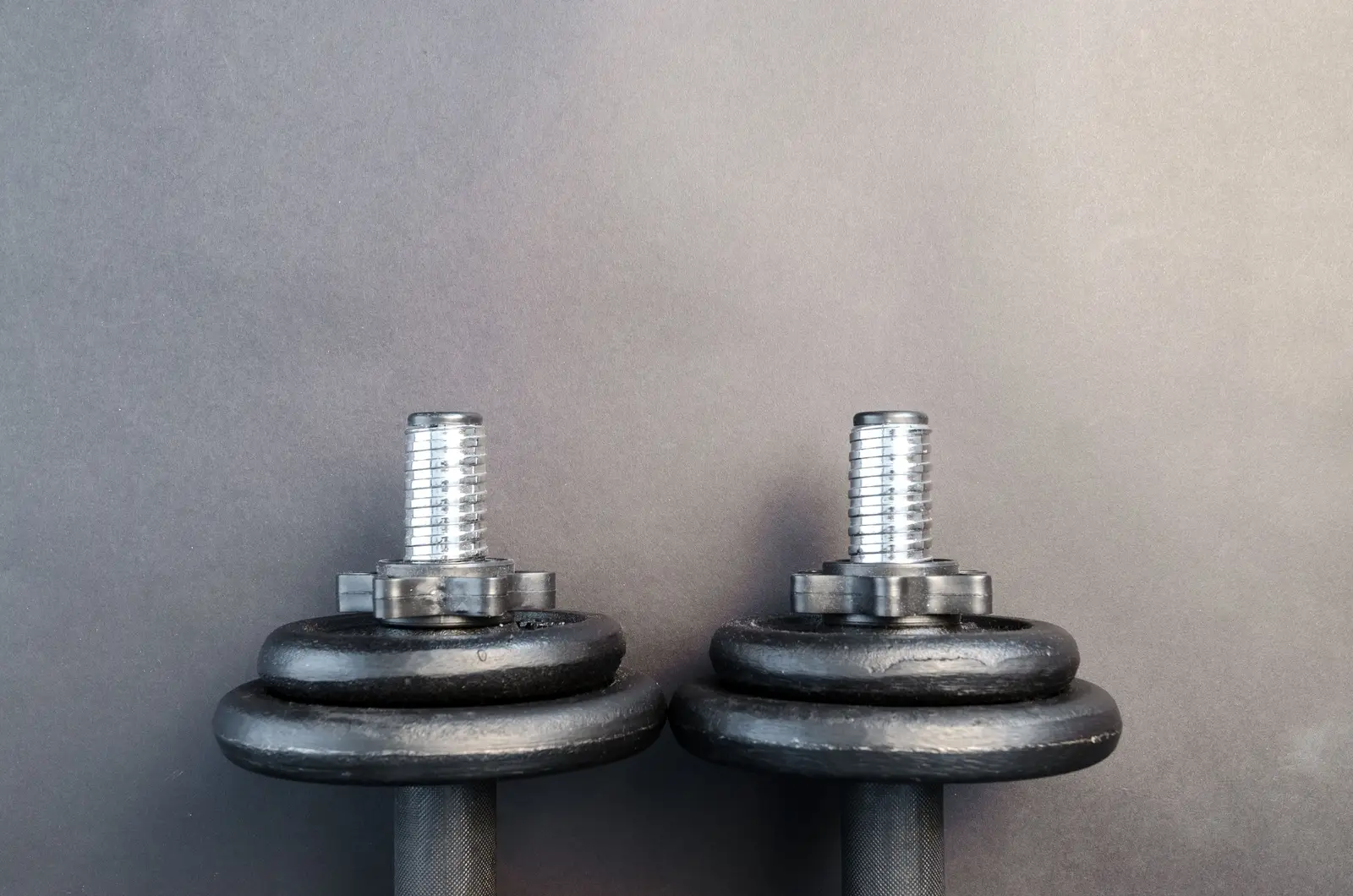
The best home gym equipment for strength training is a pair of adjustable dumbbells, a bench you can set flat or on an incline, and a pull-up bar. Those three cover pressing, rowing, squatting, hinging, curling and vertical pulling in about the footprint of a yoga mat. Buy them in that order if money is tight: dumbbells first, then the bench, then the bar.
Movements first, shopping list second
Useful equipment answers one question: which basic movement does it let you load with more weight over time? Press, row, squat, hinge, a curl or triceps movement, and something vertical like a pull-up. That's the list. A product that doesn't help you add weight or reps to one of those is furniture, whatever the box says.
Progressive overload is what builds the muscle, which means small jumps in weight or reps, week after week, on movements you can repeat with clean form. Gear that only adds variety, and never load, gives you a workout that feels busy and goes nowhere.
Adjustable dumbbells do the most work
One set replaces a shelf of fixed pairs. You dial the resistance up or down on a single handle, so the same dumbbell handles presses, rows, curls and lunges, and it stores in a corner. Muscle & Fitness makes that case in its home gym guide, and it holds up: for anyone training in a spare room or half a garage, floor space is the binding constraint.
The catch sits in the details. Handle shape, grip and the adjustment mechanism vary between models, and those differences matter more than the marketing photos suggest. A chunky handle changes how a curl or a lateral raise sits in your hand, and the cradle you set the dumbbell back into takes up floor space between sets. Check the top weight against what you press and row now. Buying for the lifter you plan to be in six months usually produces a set that feels wrong from week one.
One point from that guide is worth repeating: a weight that works for rows can be too heavy for lateral raises. Expect to work in the middle of the range on your big movements and near the bottom on the small ones, and pick a set whose range has room above your current row weight.
The bench turns dumbbells into a program
A flat bench handles pressing and supported rows. An incline setting adds upper-chest pressing and gives you a backrest for seated shoulder work. Check the stated weight limit against your bodyweight plus the dumbbells, and measure the footprint before you order, since the bench is the bulkiest single item in the setup. A pad or leg assembly that shifts under load is the reason most home benches end up folded against a wall.
When a barbell and rack are worth the space
A barbell takes more load than any dumbbell set you'd keep indoors, and the rack is the piece that earns it. Safety arms let you fail a rep alone, which is what makes heavy squatting and bench pressing at home reasonable rather than reckless. That setup also needs permanent floor space and a surface that tolerates weight coming down. If the room turns back into a living room at seven in the evening, put the money into a better dumbbell set.
What to skip
- A full rack of fixed dumbbells. You'll use two or three pairs and store the rest.
- Multi-station machines. They eat the floor space of a bench and a rack together and hand you a fixed range of resistance you'll outgrow on squats and presses.
- Vibration plates and any device that doesn't let you add weight to a movement.
- Anything sold with a fat-loss claim attached. Lifting builds strength and muscle. A calorie deficit handles fat loss.
Space and floor
You need room to move freely, which is less than a spare room and more than most people assume. Measure for three things: lying flat with your arms overhead, a step behind you for lunges and split squats, and a wall or door frame that takes a pull-up bar without damage. Check the ceiling height above your overhead press too. Rubber tiles under the bench protect the floor and stop it sliding mid-set.
A three-day plan built for this kit
Three full-body sessions a week is enough to start. Alternate session A and session B, so a typical week runs A, B, A, and the next week runs B, A, B. Leave at least a day between sessions that hammer the same muscles, and stop a set when your form breaks rather than chasing the last rep.
Weeks 1-3
Session A
- Goblet squat3 sets · 8-10 · Add one rep per set each week. At 10 reps on all three sets, move up one dumbbell setting.
- Dumbbell bench press3 sets · 8-12 · Add reps to 12, then increase the weight and drop back to 8.
- One-arm dumbbell row3 sets · 10-12 per side · Reach 12 clean reps per side before adding weight.
- Dumbbell Romanian deadlift3 sets · 10-12 · Add reps first. The hinge gets heavy fast once you load it.
- Pull-up or inverted row3 sets · 4-8 · Add one rep per week. Use a band for assistance if you can't reach 4.
- Dumbbell curl2 sets · 12-15 · Add reps, then add weight once you pass 15.
Session B
- Split squat3 sets · 8-10 per leg · Add reps to 10, then hold heavier dumbbells.
- Incline dumbbell press3 sets · 8-12 · Same rule as the flat press: reps to 12, then weight.
- Seated dumbbell shoulder press3 sets · 8-10 · Add reps before weight. Shoulders stall faster than legs.
- Chest-supported row3 sets · 10-12 · Add weight when 12 reps on all sets is clean.
- Lateral raise2 sets · 12-15 · Use the lightest setting. Add reps, not weight, until 15 is easy.
- Hanging knee raise2 sets · 8-12 · Add reps. Add ankle weight only after you hit 12.
Weeks 4-6
Session A
- Goblet squat4 sets · 8-10 · Add the fourth set, then keep adding reps toward 10 on every set.
- Dumbbell bench press4 sets · 8-12 · Go up one setting when all four sets reach 12.
- One-arm dumbbell row3 sets · 12-15 per side · Add reps to 15, then take the next weight up.
- Dumbbell Romanian deadlift3 sets · 12-15 · Add reps. Keep the back flat and stop the set if it rounds.
- Pull-up or inverted row3 sets · 6-10 · Add a rep per week, or drop the assistance band for one set.
- Dumbbell curl3 sets · 10-12 · Heavier setting now that you've built the reps.
Session B
- Split squat3 sets · 10-12 per leg · Add reps to 12, then load heavier.
- Incline dumbbell press4 sets · 8-12 · Fourth set added. Move up a setting at 12 reps across all sets.
- Seated dumbbell shoulder press3 sets · 10-12 · Reps to 12, then one setting heavier.
- Chest-supported row4 sets · 10-12 · Add the fourth set before adding weight.
- Lateral raise3 sets · 12-15 · Third set added. Keep the same light setting until 15 reps is easy.
- Hanging knee raise3 sets · 10-15 · Add reps. Ankle weight comes after week 8.
Weeks 7-8
Session A
- Goblet squat4 sets · 6-8 · Heavier setting, lower reps. Week 8: drop to 2 sets at a weight that still feels like work.
- Dumbbell bench press4 sets · 6-8 · Heaviest setting you can press for 6 clean reps. Week 8 is lighter.
- One-arm dumbbell row4 sets · 8-10 per side · Add the fourth set at the heavier weight.
- Dumbbell Romanian deadlift3 sets · 8-10 · Heavier, fewer reps. Reset your setup on every rep.
- Pull-up or inverted row4 sets · 5-8 · Add a set. Drop assistance bands where you can.
Session B
- Split squat3 sets · 6-8 per leg · Heavier dumbbells, fewer reps. Week 8 back to 2 sets.
- Incline dumbbell press4 sets · 6-8 · Heavier setting. Week 8 is a lighter session to finish.
- Seated dumbbell shoulder press3 sets · 6-8 · Add weight only if the last set is still clean.
- Chest-supported row4 sets · 8-10 · Heavier setting, reps in the middle of the range.
- Lateral raise3 sets · 12-15 · Stay light. Small muscles progress slowly.
The progression rule is simple: when you hit the top of the rep range on every set with clean form, move up one setting and drop back to the bottom of the range. Add reps before weight. If a set falls apart at rep 6, that weight is too heavy for that movement today, and the fix is a smaller jump, not more effort.
FAQ
- Can you build muscle with only adjustable dumbbells?
- Yes. Muscle grows from progressive overload, and dumbbells let you add weight in small steps on your main movements. The ceiling arrives when your pressing or rowing outgrows the heaviest setting, which is the point where a barbell and rack start to make sense.
- What should I buy first for a home gym?
- A pair of adjustable dumbbells. They cover more movements per square metre than anything else, and a bench without weights is a shelf. Add the bench once you're training three times a week, then a pull-up bar when you have a door frame or wall that can take one.
- How much space does a home gym need?
- Enough floor to lie flat with your arms overhead, a step behind you for lunges, and wall or door-frame clearance for a pull-up bar. Measure those three, plus the ceiling above your overhead press, and you'll know whether the room works.
- Is a barbell better than dumbbells for strength?
- A barbell lets you load heavier on squats and bench presses. It also needs a rack with safety arms to train alone near your limit. Dumbbells get you strong with less equipment and less risk, so start there and upgrade when the weights run out.
- How often should you train at home?
- Three full-body sessions a week is enough to make progress, with at least a day between sessions that hit the same muscles. Two consistent sessions beat four you skip. The plan above works on three.
Sources
Related guides
Best walking and running shoes: Clifton 11 vs On Cloud X4
The Hoka Clifton 11 handles walking and easy running for most people, and the On Cloud X4 is the firmer, lighter alternative for gym days. How to pick between them.
Best fitness trackers for women: Whoop or a Garmin strap
Whoop 5.0 is the tracker to beat for sleep and recovery, but it needs a subscription. A Garmin chest strap covers workout heart rate. How to choose, and which numbers to ignore.

Bear Grylls's gear list: what's worth the money, what isn't
Bear Grylls's adventure gear list runs to six items, from zero-drop shoes to a squat rack he leaves behind. Three are worth copying, three you can skip.