
How to calculate a calorie deficit: start 500 under maintenance
A calorie deficit is maintenance minus a number you can actually hold. Here's the arithmetic, the floor to stay above, and why the same deficit stops working by month two.
To calculate a calorie deficit, estimate the calories you burn in a day, subtract 500, and check the result sits above 1,200 calories if you're a woman or 1,500 if you're a man. That lands most people at about 1 lb of fat loss a week at the start. Treat the number as a starting guess and recheck it against the scale after two to three weeks, because the rate falls as you get lighter.
Step 1: work out your maintenance calories
Two methods get you close. Mifflin-St Jeor takes your sex, height, weight and age and returns a resting burn, which you then multiply by an activity factor. The 2023 National Academies equations put the activity inside the equation, and they're built on doubly labeled water measurements, the method that tracks how much energy people actually expend living their normal lives rather than sitting in a lab.
The activity factor is where estimates diverge. Calorie Deficit Calc dropped the usual 1.2 to 1.9 multiplier table because its authors couldn't trace those numbers to a primary source. Fatcalc starts its multiplier at 1.4 for sedentary and runs to 2.3 for very active. Choosing 1.4 instead of 1.9 can move maintenance by several hundred calories, so pick the lower end if you sit at a desk and don't train.
Here's the arithmetic on a real profile. A 35-year-old woman at 190 lb who is lightly active: Mifflin-St Jeor puts her resting burn at 1,558 calories, and light activity takes maintenance to 2,380. Every step after this uses 2,380 as the anchor.
Step 2: take off 500, then sanity-check the percentage
A pound of body fat stores about 3,500 calories, so 500 a day adds up to 3,500 a week and roughly 1 lb (0.45 kg) of loss. That's the default in the 2013 US obesity guideline and the figure most calculators open with. For the woman above, 500 is 21% of her 2,380 maintenance, and 1 lb a week is 0.53% of her body weight.
Percentages are the better check once you have a raw number. Keep weekly loss between 0.5% and 1% of body weight. Fitness Volt's calculator caps the deficit at 25% of maintenance, or at the cut that would cost 1% of body weight a week, whichever is smaller, and it tells you when a cap changed your result. Push past that and a bigger share of the loss comes from muscle, which makes the next deficit harder to run.
Step 3: find your floor before you pick a target
Don't eat below 1,200 calories a day as a woman or 1,500 as a man without a doctor involved. Fitness Volt sets its minimum at the higher of 1.2 times your BMR or 1,200 calories, which for the 190 lb woman is 1,870. Her 1,880 target clears that floor by 10 calories. A 500-calorie cut leaves a woman that size almost no room, which is why heavier or more active people can run a bigger deficit safely and smaller people often can't.
Why month two looks like a broken calculator
The 3,500-calorie rule comes from Wishnofsky in 1958, and it overshoots. Real-world loss runs 10 to 20 percent slower than the formula predicts, especially past week four. The reason is simple: a lighter body burns less, so the same intake produces a smaller gap. The NIH dynamic weight-change model (Hall and colleagues, The Lancet, 2011), which powers the NIH Body Weight Planner, is built around that feedback loop.
In practice, a 500-calorie deficit that gives you 1 lb a week in week two may give half that by month three if your intake never moves. That's the model working as designed.
Step 4: adjust against the scale every two to three weeks
Eat at your target for two to three weeks, track your weight, and move intake by 100 calories a day if the scale doesn't match the prediction. Weigh yourself most days and compare weekly averages, since single-day changes are mostly water and food. Then recalculate maintenance at your new weight: the number that was right at 190 lb is too high at 180 lb.
What fills the calories
TDEE Calculator shows a maintenance split of 30% protein, 40% carbs and 30% fat as a starting point. Fatcalc's worked example gives the 190 lb woman 63 g of fat, never under 42 g, with carbs taking the rest at 246 g. I'd hold protein at 1.6 to 2 g per kg of body weight while you're in a deficit, which gives your body a reason to keep the muscle you have.
Food quality decides how hard the deficit feels. Dietitians at MD Anderson point to whole grains, vegetables, fruit, beans, nuts and seeds as the base of a balanced diet, and those foods carry volume for the calories. The American Institute for Cancer Research recommends at least 150 minutes of moderate activity or 75 minutes of vigorous activity a week, which is five half-hour walks or three brisk ones and two lifting sessions.
Keep lifting while you're in the deficit
Two full-body sessions a week hold muscle through a moderate deficit, and it's the version you'll still be doing in week eight. The volume versus intensity question matters less than getting the sessions in, and once you've been consistent for a few months it's worth reading how the two compare for growth.
If you're over 50, plan the muscle side more carefully: losing fat after 50 means holding muscle while the scale drops, which usually means smaller deficits and more lifting rather than more cardio.
Week 1: calibrate
Session A (full body)
- Goblet squat3 sets · 8-10 · Stop two reps short of failure. Log the load you used.
- Dumbbell bench press3 sets · 8-10 · Same weight all week, clean reps only.
- One-arm dumbbell row3 sets · 10-12 · Add 5 lb per side once you hit 12 on every set.
- Front plank3 sets · 30-40 seconds · Add 5 seconds each week.
Session B (full body)
- Romanian deadlift3 sets · 8-10 · Hold the load steady for week 1 and let the hamstrings adapt.
- Lat pulldown3 sets · 8-10 · Add 5 lb when you reach 10 reps on all three sets.
- Seated dumbbell shoulder press3 sets · 8-10 · Add 2.5 lb per hand once 10 reps feel clean.
- Split squat3 sets · 10 per leg · Bodyweight until 10 per leg is easy, then hold dumbbells.
Week 2: add reps at the same load
Session A (full body)
- Goblet squat3 sets · 10-12 · Same weight, one more rep per set than week 1.
- Dumbbell bench press3 sets · 10-12 · Chase the top of the range before adding weight.
- One-arm dumbbell row3 sets · 12-14 · Keep the elbow tight; add load next week.
- Front plank3 sets · 40-50 seconds · Add 5 seconds and stop when the hips sag.
Session B (full body)
- Romanian deadlift3 sets · 10-12 · Add 5 lb if week 1 left no soreness past 48 hours.
- Lat pulldown3 sets · 10-12 · One rep more per set at the same load.
- Seated dumbbell shoulder press3 sets · 10-12 · Add a rep before you add a plate.
- Split squat3 sets · 12 per leg · Add light dumbbells at 12 clean reps per leg.
Week 3: add load, cut a set if recovery slips
Session A (full body)
- Goblet squat3 sets · 8-10 · Add 5-10 lb and drop back to the bottom of the rep range.
- Dumbbell bench press3 sets · 8-10 · Add 2.5 lb per hand, keep the reps clean.
- One-arm dumbbell row3 sets · 10-12 · Add 5 lb per side and rebuild to 12.
- Front plank2 sets · 45-60 seconds · Two hard sets beat three sloppy ones in a deficit.
Session B (full body)
- Romanian deadlift3 sets · 8-10 · Add 10 lb if week 2 felt controlled.
- Lat pulldown3 sets · 8-10 · Add 5 lb and stay two reps short of failure.
- Seated dumbbell shoulder press3 sets · 8-10 · Add 2.5 lb per hand and rebuild the reps.
- Split squat3 sets · 10 per leg · Hold dumbbells for all sets, rest 90 seconds between.
Frequently asked questions
- Is a 500-calorie deficit too much?
- It depends on your maintenance. On 2,380 calories, 500 is a 21% cut and fine. On 1,900 calories it's 26% and close to the cap most calculators apply. If your target drops under 1,200 (women) or 1,500 (men), shrink the deficit and accept slower loss.
- Why am I not losing weight on 1,200 calories?
- Usually the intake is higher than 1,200: drinks, cooking oil, unlogged bites and weekend meals add up. If intake really is 1,200 and weight hasn't moved in three weeks, your maintenance is lower than the calculator predicted. Recheck the estimate at your current weight before cutting further.
- Do I have to count calories exactly?
- No. Weighing your food for a week calibrates your eye, and after that estimates get close enough. The adjustment step matters more than precision: weigh yourself weekly and move intake by 100 calories at a time when the trend stalls or drops too fast.
- How long until the scale moves?
- The first week often shows a quick drop from water and glycogen, which isn't fat. Judge progress on the three-week trend. Aim for 0.5% to 1% of body weight a week, and expect that rate to fall as you get lighter, which is why the target gets recalculated every couple of months.
- Does exercise change the deficit?
- Yes, but less than people expect, and calculators already count it when you pick an activity level. Adding 150 minutes of moderate activity a week raises maintenance slightly. Lifting twice a week mostly protects muscle, so more of the weight you lose comes from fat.
Sources
Related guides

Losing 10 pounds takes 2 to 3 months, and that is the safe pace
Most people can lose 1 to 2 pounds a week, so 10 pounds takes two to three months. Here is the walking, strength work and food plan that gets you there without gallstones.

Losing fat after 50 means holding muscle, not adding cardio
Fat loss after 50 leans on three things you control: a moderate calorie deficit, 50 to 70g of protein at each meal, and three or four lifting sessions a week to keep the muscle you already have.
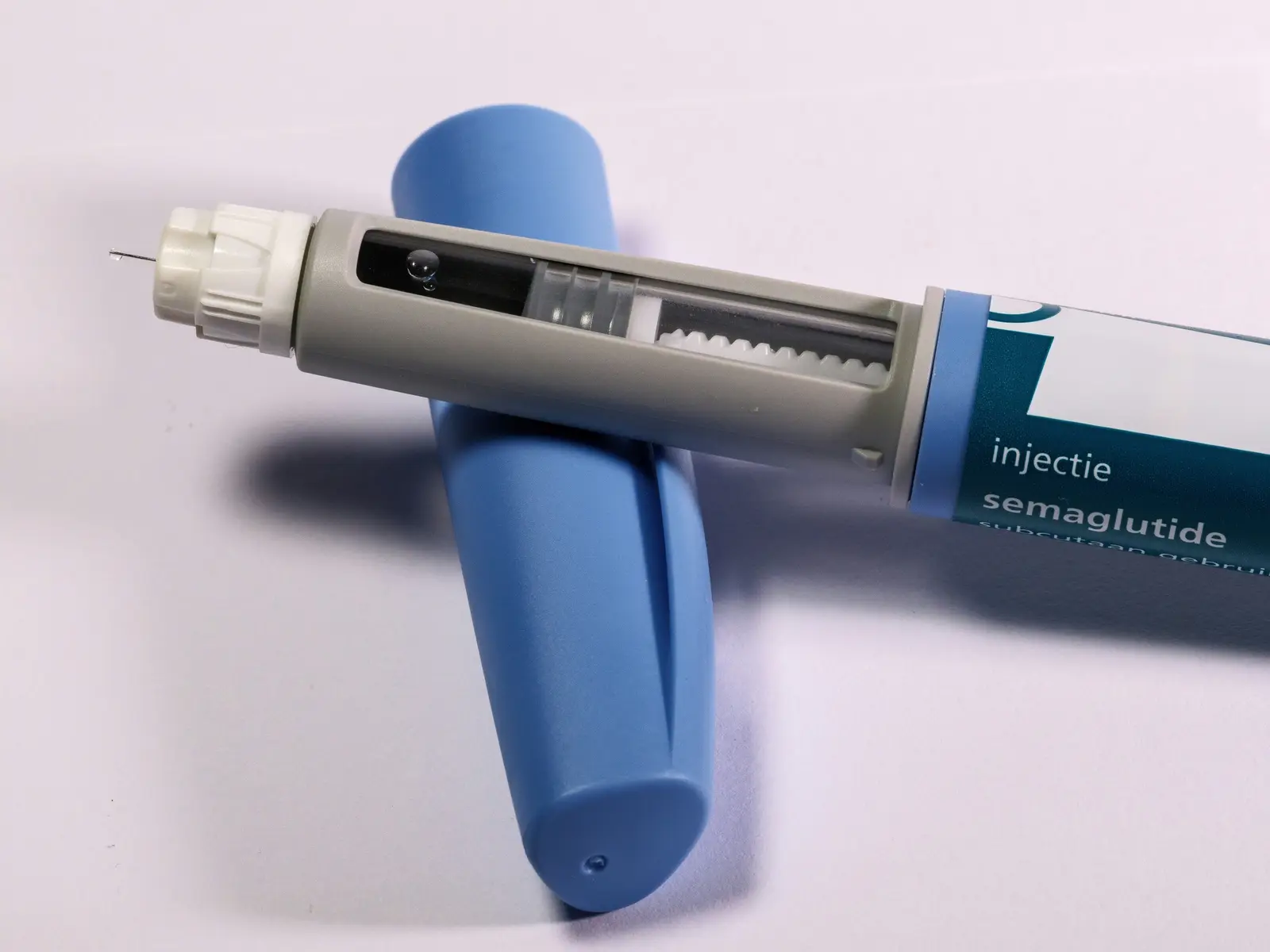
Ozempic costs $1,000 a month; the natural version is only years out
A Stanford team used an AI screen to find BRP, a 12-amino-acid peptide that mimics semaglutide in animals. Here is what the study shows and what you can actually do now.