
Ozempic costs $1,000 a month; the natural version is only years out
A Stanford team used an AI screen to find BRP, a 12-amino-acid peptide that mimics semaglutide in animals. Here is what the study shows and what you can actually do now.
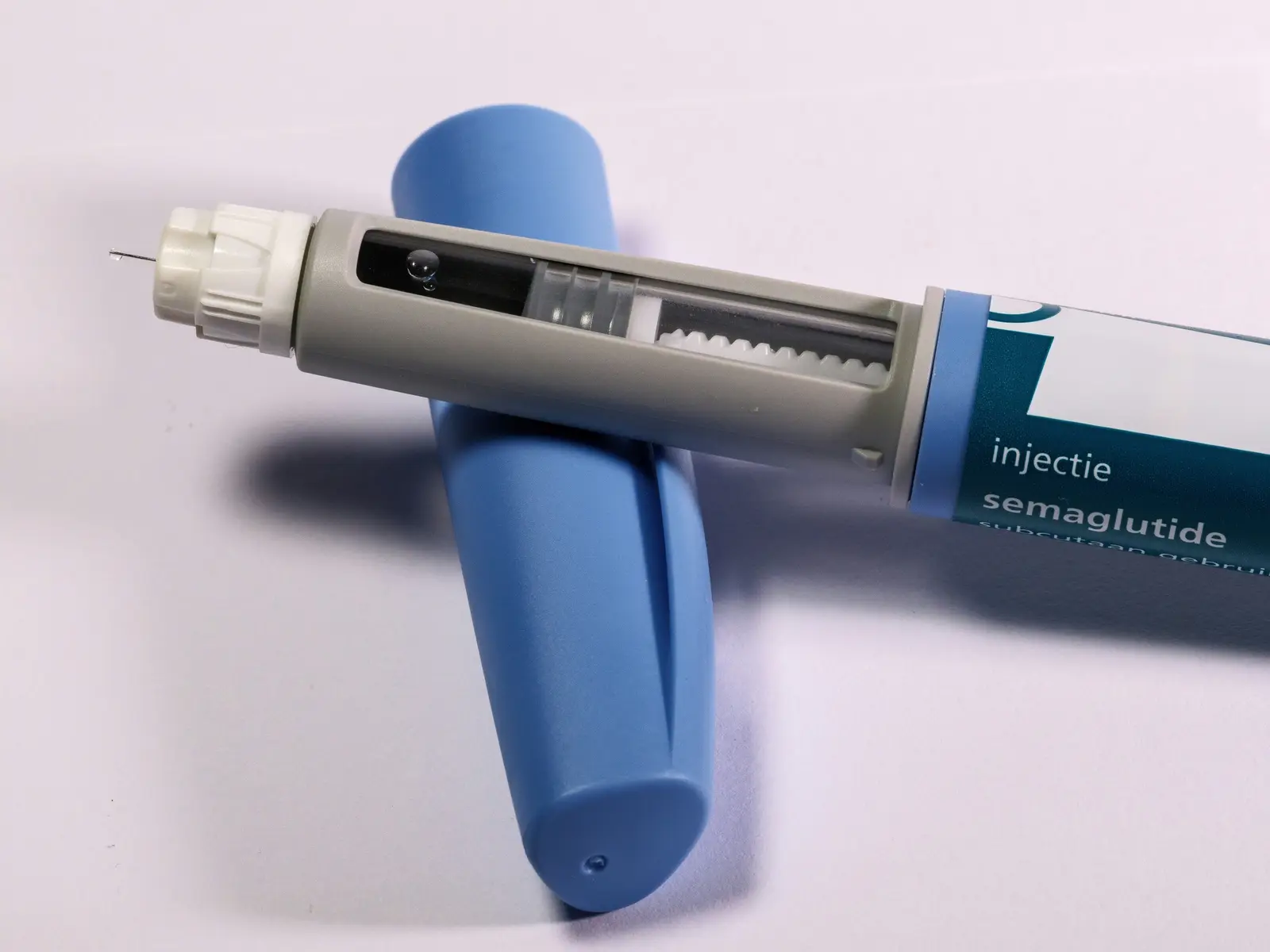
There is no natural Ozempic alternative on sale, and nothing in a bottle works the way semaglutide does. The nearest thing in the published research is BRP, a 12-amino-acid peptide that a Stanford team identified using an AI screen, reported in a March 2025 study. It has been tested in lean mice and in miniature pigs. No human trial has been published, and you cannot buy it.
That gap is the whole story. A molecule that changes appetite in a mouse is where drug development starts, and most candidates that get that far never reach a pharmacy. Ozempic, by comparison, costs upward of $1,000 a month without insurance in the US and already does the job in humans. Natural and cheap are different things from proven and available.
What BRP actually is
A peptide is a short chain of amino acids. BRP is 12 of them, which puts it in the same size class as the gut hormones your body already uses to signal hunger and fullness. Semaglutide, the drug in Ozempic and Wegovy, is a modified copy of one of those hormones, GLP-1, engineered so it survives longer in the body than the natural version.
The interesting part of BRP is where it acts. Katrin Svensson, an assistant professor of pathology at Stanford and the lead author, explained that semaglutide's receptor sits in the brain but also in the gut, the pancreas and other tissue, which is why the drug slows digestion and lowers blood sugar along with cutting appetite. BRP appears to act in the hypothalamus, the part of the brain that controls appetite and metabolism. A narrower target could mean fewer gut side effects and less interference with blood sugar. That is a hypothesis until someone runs a human trial.
How the AI screen narrowed 20,000 genes to one peptide
The hard part of this kind of work is sorting real signalling peptides from the noise of ordinary protein breakdown. The team wrote an algorithm that scanned 20,000 protein-coding genes and cut the field to 373 prohormones carrying 2,683 peptides. They then narrowed to roughly 100 with the kind of sequence likely to be active in the brain, the same way GLP-1 drugs are, and screened those. BRP came out of that shortlist. Manual lab work at that scale would have taken years.
What the animal data shows, and what it does not
BRP was tested in lean mice and in miniature pigs, which resemble human physiology more closely than rodents do in several ways. Those results are why the finding got attention. They are also why to stay calm about it. A compound that suppresses appetite in a lean animal has not been shown to produce lasting weight loss in a person with obesity, and the studies that would answer that question have not been run. No human dose, no route of administration and no development timeline have been published.
One more thing worth knowing before you get excited about a cheap pill: peptide drugs of this size usually have to be injected, because your stomach breaks them down. If BRP follows that pattern, it will be a prescription product with a supply chain and a price, not a powder you stir into water.
Why nothing in the supplement aisle comes close
Berberine, green tea extract, glucomannan, chromium, and whatever else is being marketed as nature's semaglutide this month: none has been shown to produce the weight loss semaglutide produces in trials, and the evidence behind most of them is thin. When a bottle promises to work like Ozempic, the accurate translation is that it does not. Berberine in particular can interact with prescription medicines, including some diabetes drugs, so ask a pharmacist before adding it.
You also cannot buy BRP. There is no product, no dose and no safety data, so any site selling it is selling you something else with a borrowed name. If a label says BRP within the next year, treat it as marketing.
What to do this month instead
Whether a GLP-1 drug is right for you is a conversation with a doctor, particularly if your BMI sits in the range where those drugs are prescribed. If you have a health condition, get medical input before changing your diet or training. Outside of medication, the levers have not changed, and they still beat every fat burner on the shelf:
- A calorie deficit of roughly 300-500 kcal a day, which tends to produce 0.25-0.5 kg of loss a week for most people.
- Protein at 1.6-2.2 g per kg of body weight, spread across three or four meals, to hold on to muscle while you lose.
- Two or three full-body lifting sessions a week, adding weight or reps over time.
- 7,000-9,000 steps a day and 7-9 hours of sleep. Short sleep makes appetite harder to manage.
A four-week plan you can start this week
Three sessions a week, built around the movements that respond to progressive overload. If you already train, start at week 3 loads. Use dumbbells or machines you can control, and leave one rep in reserve on every set.
Week 1: find your working weights
Session A: squat and push
- Goblet squat3 sets · 8-10 · Keep the same weight all week. Add 2.5 kg once you hit 10 clean reps on all three sets.
- Dumbbell bench press3 sets · 8-10 · Leave one rep in reserve on every set.
- One-arm dumbbell row3 sets · 10-12 per side · Add 1 kg per dumbbell once you reach 12.
- Plank3 sets · 20-30 seconds · Add 5 seconds next week.
Session B: hinge and pull
- Dumbbell Romanian deadlift3 sets · 8-10 · Stop each set when your lower back starts to round.
- Incline push-up3 sets · 6-12 · Lower the surface as you get stronger.
- Lat pulldown or band pull-down3 sets · 10-12 · Add a small increment once 12 reps are clean.
- Dead bug3 sets · 8 per side · Slow the movement down before adding reps.
Session C: walking and core
- Brisk walk1 sets · 30 minutes · Add 5 minutes a week up to 45.
- Side plank3 sets · 15-20 seconds per side · Add 5 seconds a week.
- Hip bridge2 sets · 12-15 · Pause for a second at the top of each rep.
Week 2: add reps before weight
Session A: squat and push
- Goblet squat3 sets · 10-12 · Chase the top of the range before adding load.
- Dumbbell bench press3 sets · 10-12 · Add 1-2 kg once 12 reps feel controlled.
- One-arm dumbbell row3 sets · 12-15 per side · Keep your torso still; no twisting to finish a rep.
- Plank3 sets · 30-40 seconds · Stop the set when your hips drop.
Session B: hinge and pull
- Dumbbell Romanian deadlift3 sets · 10-12 · Add 2.5 kg total when all sets are clean.
- Incline push-up3 sets · 8-12 · Add one rep per set before lowering the surface.
- Lat pulldown or band pull-down3 sets · 12-15 · Add a small increment at 15 reps.
- Dead bug3 sets · 10 per side · Keep your lower back flat on the floor.
Session C: walking and core
- Brisk walk1 sets · 35 minutes · Add a hill or a faster final 5 minutes.
- Side plank3 sets · 20-30 seconds per side · Keep hips stacked, no sagging.
- Hip bridge2 sets · 15 · Try single-leg reps once 15 is easy.
Week 3: add a set on the big lifts
Session A: squat and push
- Goblet squat4 sets · 8-10 · Add 2.5-5 kg and keep four sets.
- Dumbbell bench press4 sets · 8-10 · Add 1-2 kg per dumbbell.
- One-arm dumbbell row3 sets · 10-12 per side · Add 1 kg per dumbbell.
- Plank3 sets · 40-45 seconds · Add 5 seconds.
Session B: hinge and pull
- Dumbbell Romanian deadlift4 sets · 8-10 · Add 2.5 kg total and keep the tempo slow.
- Incline push-up3 sets · 10-15 · Lower the surface one notch.
- Lat pulldown or band pull-down4 sets · 10-12 · Add a small increment.
- Dead bug3 sets · 10 per side · Add a two-second pause at full extension.
Session C: walking and core
- Brisk walk1 sets · 40 minutes · Hold a pace where talking is possible but singing is not.
- Side plank3 sets · 30 seconds per side · Add 5 seconds.
- Hip bridge3 sets · 12 · Add a set before adding reps.
Week 4: hold steady and check the log
Session A: squat and push
- Goblet squat4 sets · 8-10 · Repeat week 3 weight, then beat week 1 by one rep per set.
- Dumbbell bench press4 sets · 8-10 · Repeat week 3 weight and aim for one extra rep.
- One-arm dumbbell row3 sets · 10-12 per side · Hold week 3 weight and clean up the form.
- Plank3 sets · 45 seconds · Add 5 seconds or stop at 60.
Session B: hinge and pull
- Dumbbell Romanian deadlift4 sets · 8-10 · Repeat week 3 weight, one more rep if it moves well.
- Incline push-up3 sets · 10-15 · Hold the week 3 surface and add reps.
- Lat pulldown or band pull-down4 sets · 10-12 · Add one rep per set.
- Dead bug3 sets · 12 per side · Keep the pause and stay slow.
Session C: walking and core
- Brisk walk1 sets · 45 minutes · Hold this duration going forward.
- Side plank3 sets · 30-35 seconds per side · Add 5 seconds when both sides are even.
- Hip bridge3 sets · 12-15 · Add single-leg reps next month.
FAQ
- Is there a natural Ozempic alternative?
- No. Nothing sold over the counter has been shown to produce the weight loss semaglutide produces in trials. The nearest research candidate is BRP, an experimental peptide tested only in animals.
- What is the BRP peptide?
- A 12-amino-acid peptide a Stanford team found by screening about 100 brain-active candidates drawn from 2,683 peptides. In the March 2025 study it acted on the hypothalamus, which controls appetite, rather than on receptors across the gut and pancreas the way semaglutide does.
- Can I buy BRP as a supplement?
- No. There is no BRP product, no human dose and no safety data. Anything sold under that name is not the compound used in the study.
- Is berberine a natural Ozempic?
- Berberine is marketed that way and the comparison does not hold. Trials show modest effects on blood sugar at best and nothing close to semaglutide's weight loss. It also interacts with some prescription medicines, so check with a pharmacist first.
- How long until BRP becomes a drug?
- No timeline has been published. Going from animal results to an approved drug usually takes many years, and most candidates fail somewhere along the way.
Sources
Related guides

Losing 10 pounds takes 2 to 3 months, and that is the safe pace
Most people can lose 1 to 2 pounds a week, so 10 pounds takes two to three months. Here is the walking, strength work and food plan that gets you there without gallstones.

Losing fat after 50 means holding muscle, not adding cardio
Fat loss after 50 leans on three things you control: a moderate calorie deficit, 50 to 70g of protein at each meal, and three or four lifting sessions a week to keep the muscle you already have.
Beginner gym workout plan: why 3 days a week beats 5 days
Three full-body sessions a week for four weeks, 2 to 3 sets of 8 to 12 reps, and a written rule for adding weight. The plan is built for a first month or a return after a year off.