
How to protect nails during workouts: 6 habits that work
Grip with your finger pads, keep the free edge short during heavy lifting weeks and oil your hands after every wash. Six habits that keep nails intact at the gym, plus what to skip.
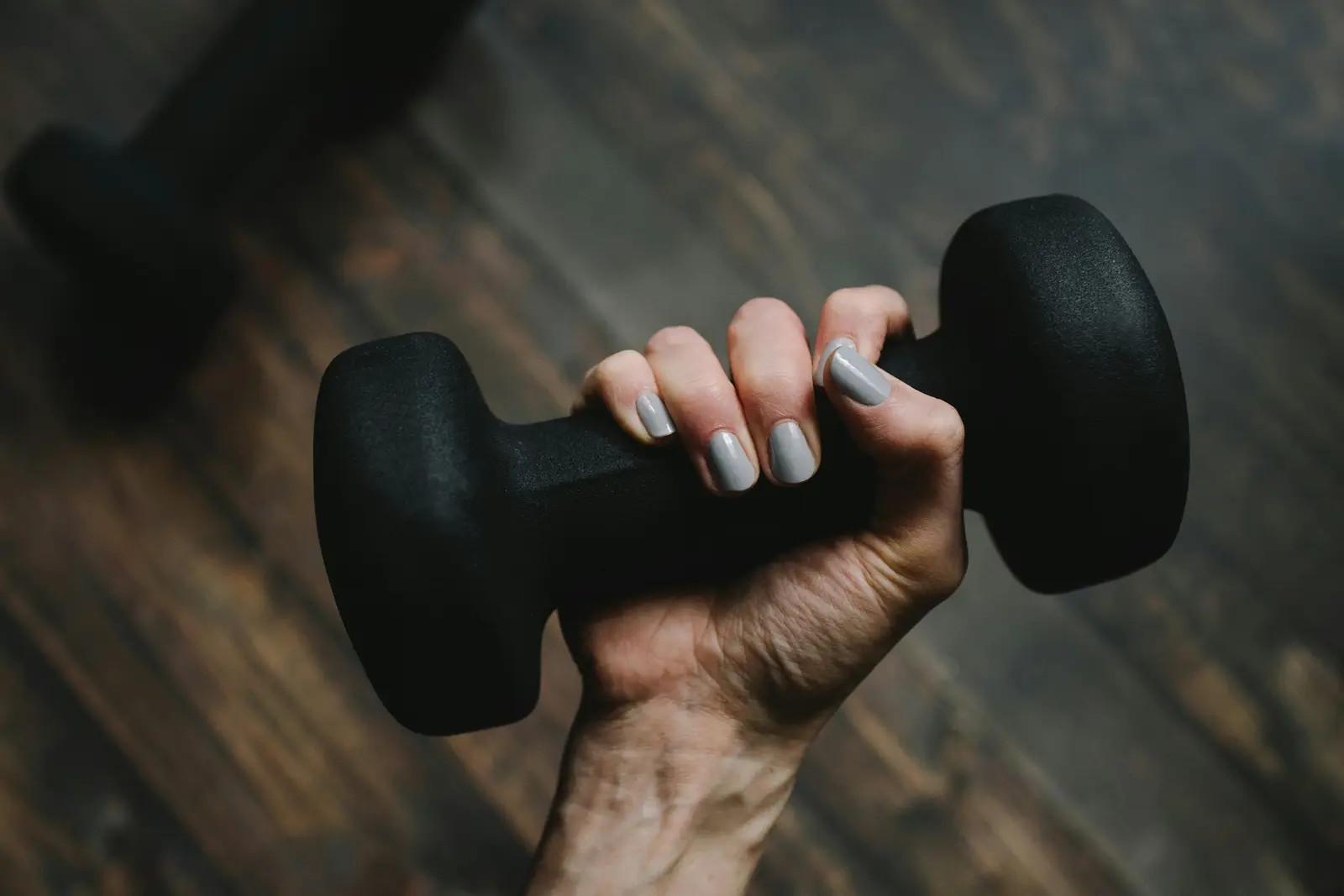
Your nail plate takes up water fast. Dana Stern, MD, a New York dermatologist who specializes in nail disorders, told Women's Health that the nail is a thousand times more absorptive of water than skin. Every hand wash, sweaty set and shower swells it; drying shrinks it again. Stern says those repeated wet-dry cycles contribute to splitting and peeling, particularly in people already prone to brittle nails. A single gym session stacks several cycles into an hour: chalk pulls moisture out of the surface, sweat softens it, then you wash your hands and the whole thing swings back.
Load does the rest. A bar, a dumbbell handle or a cable attachment presses into whatever part of your hand you present to it. Present your fingertips and the weight of the set runs through the free edge, which is the thinnest part of the plate and the least securely attached. Do that four sessions a week for a few months and the nail lifts, splits or tears at the edge.
Six habits that do most of the work
- Grip with the finger pads, not the fingertips, on bars, plates and handles.
- Keep the free edge short enough that it never presses into your palm at the bottom of a lift.
- File in one direction with a fine grit every week and smooth snags immediately.
- Wear a thin glove on dumbbells, cable handles and anything rubberized, and take it off between sets.
- Oil or moisturize after every hand wash, not once a day.
- Have gel or acrylic removed properly instead of picking it off, and skip long extensions during heavy pulling weeks.
Grip with the finger pads, not the fingertips
Celebrity manicurist Gina Edwards, a KISS ambassador who lifts, told Women's Health she uses her finger pads rather than the tips of her fingers when she's handling plates and weights, to keep unnecessary pressure off her nails. You can make that change today. Wrap your fingers so the knurling sits in the crease of the first joint, not under the tip of the nail. On pulling movements that usually means a slightly deeper grip or a hook grip on deadlifts.
The place most people forget is loading. Racking plates, sliding collars on, pulling dumbbells off the rack and adjusting a cable pin all happen fast, with the fingertips, and they're where a nail catches and bends backward. Slow those four movements down and use the pads of your fingers on the plate rim instead of hooking the edge.
Long nails make the good grip harder, because they physically stop your fingertips from closing around the bar. You end up palming it, which is worse for your wrists and no better for your nails. Lifting straps and hooks move load off your grip on heavy deadlift and row days, though they don't fix fingertip placement if you keep reaching for it.
How short to keep them
Short enough that the free edge touches nothing when you make a fist or wrap a bar. If you can feel the nail press into your palm at the bottom of a lift, take 2 mm off. You don't need stubs: a short square with rounded corners holds up better than a long oval, which puts load on the narrowest part of the tip.
File in one direction with a fine grit rather than sawing back and forth. Back-and-forth filing catches the layers at the free edge and starts the peeling you're trying to avoid. Smooth a snag the day you find it, because a snag becomes a tear the moment it catches on knurling or a towel.
Chalk, sweat and gloves
Chalk pulls moisture out of the skin and the nail surface. That's the job on a bar, and it's fine a few times a week. The problem is stacking it with a hot class, a swim and three hand washes in the same afternoon. If you chalk every session, oil your hands when you're done.
Gloves earn their place on dumbbells, cable attachments and rubberized handles. A thin work glove or a lifting glove with fingers stops the handle dragging across the nail surface and spreads pressure over the whole finger. Fit matters more than brand: a glove that bunches at the fingertips creates its own pressure point. Take it off between sets so sweat doesn't sit against the nail for an hour.
What about gel, acrylics and extensions?
Regular polish is cosmetic and doesn't weaken the plate; peeling it off does. Gel and acrylic extensions add length, and length is leverage. A 5 mm extension puts load further from the nail bed every time you grip, so the same lift that was fine bare becomes a slow lift at the edge. If you keep them, schedule a removal or a fill around heavy pulling blocks and have the product taken off with acetone rather than picked, since picking takes surface layers of the nail with it.
Booking matters too. Get a manicure at the end of a rest day, not the night before a pull day, so the first thing your fresh set meets isn't a knurled bar.
What to do after a session
Wash with lukewarm water, dry thoroughly including under the free edge, then oil. Jojoba or a plain cuticle oil works; what you're after is a lipid layer that slows water loss while the nail dries out. Hand cream over the top helps. Leave your cuticles alone, since they seal the space where the nail meets the skin and a nick there is an infection route. And stop using your nails as tools: prying a plate, opening a clip or scraping a label off a dumbbell does more damage in one second than a careful session of gripping.
A four-week block to build the habits
Week 1: set the baseline
Every training day
- Finger-pad grip check3 sets · 5 setup reps per hand before your first working set · Hold the same placement on every set this week, warm-ups included.
- Oil after washing1 sets · 1 application after each hand wash · Add an evening application if hands feel tight by 6pm.
Weekly reset
- File the free edge1 sets · Every nail, one direction, fine grit · Take 2 mm off if any tip presses into your palm at the bottom of a lift.
- Cuticle oil soak1 sets · 10 minutes, then blot dry · Repeat twice a week if the edges peel.
Week 2: add gloves and cut the load
Dumbbell and cable days
- Glove test1 sets · One full session · Keep the gloves if knurling or rubber handles leave marks on the nail surface.
- Slow plate loading1 sets · Every plate you rack · Use the finger pads on the plate rim instead of hooking the edge.
Weekly reset
- Snag check1 sets · Run a fingernail across every free edge · File any catch the same day it appears.
Week 3: manage length and polish
Pulling days
- Grip audit on deadlifts and rows1 sets · Every working set · Use straps if the free edge is still taking load at the top of the rep.
Manicure timing
- Book the appointment1 sets · End of a rest day, short square · Push removal or a fill past heavy pulling weeks if the tips keep lifting.
Week 4: lock it in
Every training day
- Grip check and oil3 sets · 5 setup reps, then oil after the session · Keep this as the default until the finger-pad placement is automatic.
Monthly review
- Compare edges1 sets · Photo of all ten nails · If splitting is unchanged after four weeks, book a dermatologist.
When to see a dermatologist
Most gym-related nail wear is cosmetic and settles over a few weeks once you change the grip. Book an appointment if a nail separates from the bed and stays that way, if splitting keeps coming back despite the habits above, if you see discoloration, or if the skin around the nail is red, swollen or painful. That list is worth a professional look rather than another coat of top coat.
Frequently asked questions
- Why do my nails peel after working out?
- Water. The nail absorbs it quickly and swells, then shrinks as it dries, and repeated wet-dry cycles split the layers at the free edge. Sweat, chalk and frequent hand washing stack several cycles into one session. Oil after every wash and keep the edge filed smooth.
- Do lifting gloves protect your nails?
- Yes, partly. A thin glove with fingers stops knurling and rubber handles dragging across the nail surface and spreads pressure across the whole finger. It won't fix a fingertip grip, and a glove that bunches at the tips creates a new pressure point. Take it off between sets.
- How short should nails be for lifting?
- Short enough that the free edge touches nothing when you make a fist. If you feel the nail press into your palm at the bottom of a lift, take 2 mm off. A short square with rounded corners holds up better than a long oval.
- Should I take my gel nails off before lifting?
- Not necessarily. Keep them shorter during heavy pulling blocks and have them removed with acetone rather than picked off. Length adds leverage on the nail bed, so a long extension is the part that causes trouble, not the gel itself.
- Does chalk damage nails?
- It dries them. Chalk pulls moisture from the skin and nail surface, which is fine occasionally. Stacked with hot classes, swimming and repeated hand washing, it adds to the wet-dry cycling that causes splitting. Oil your hands after sessions where you chalk heavily.
Sources
Related guides
Best walking and running shoes: Clifton 11 vs On Cloud X4
The Hoka Clifton 11 handles walking and easy running for most people, and the On Cloud X4 is the firmer, lighter alternative for gym days. How to pick between them.
Best fitness trackers for women: Whoop or a Garmin strap
Whoop 5.0 is the tracker to beat for sleep and recovery, but it needs a subscription. A Garmin chest strap covers workout heart rate. How to choose, and which numbers to ignore.
Bear Grylls's gear list: what's worth the money, what isn't
Bear Grylls's adventure gear list runs to six items, from zero-drop shoes to a squat rack he leaves behind. Three are worth copying, three you can skip.